
27 October 2026
How to hold a pencil correctly: the right grip for kids
Hold the pencil between the thumb and index finger, let it rest on the side of the middle finger, and keep the grip relaxed, about two to three centimetres above the tip. This is the tripod grip. It gives a child control of the pencil without tiring the hand, and it is the grip most teachers aim for.
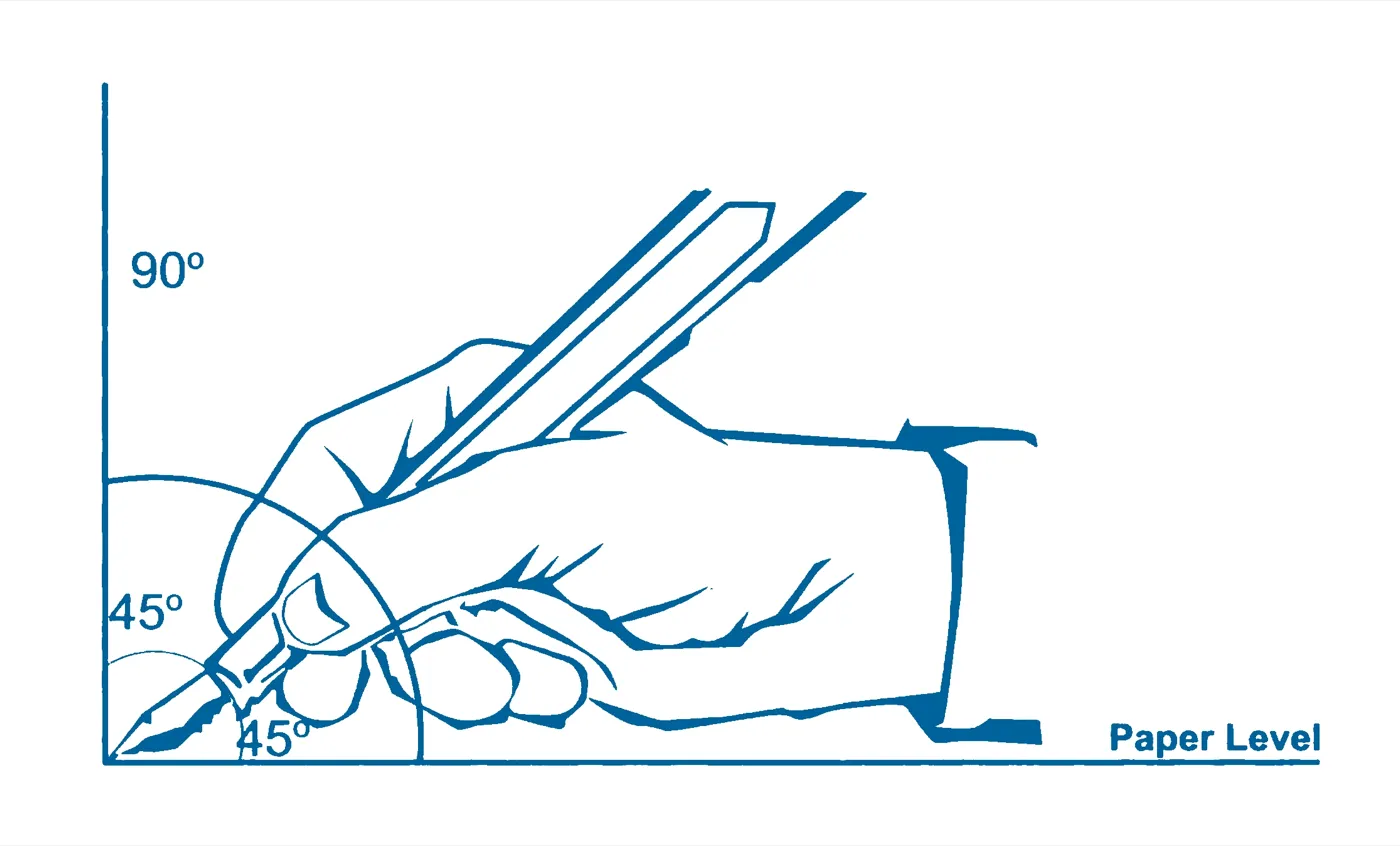
The tripod grip, step by step
- Lay the pencil on the table, pointing away from your child.
- Ask them to pinch it with the thumb and index finger, a little way up from the sharpened part.
- Lift it and let the pencil rest on the side of the middle finger.
- Let the ring and little fingers curl gently into the palm.
- The top of the pencil should rest against the hand, near the base of the index finger.
Now ask them to draw a few circles. The fingers should do the small movements, and the wrist should rest on the table.
How tight should the grip be?
Light. If the fingertips turn white, or the pencil leaves deep grooves on the page underneath, your child is pressing too hard. A tight grip tires the hand within minutes and makes the writing shaky. A quick test: you should be able to slide the pencil out of their fingers with a gentle pull.
Common grip problems
| What you see | What it causes | What to try |
|---|---|---|
| Fist grip, the whole hand around the pencil | Large, shaky letters, little control | Short pencils or broken crayons, which only fit a finger grip |
| Thumb wrapped over the index finger | A tired hand, slow writing | Practise the pinch with a small eraser held under the ring finger |
| Fingers right at the tip | Smudges, cramped letters, no view of the line | Mark a line on the pencil where the fingers should stop |
| Four fingers on the pencil | Stiff movement from the wrist | Practise the tripod pinch with tongs, tweezers or clothes pegs |
| Hard pressing | Pain, torn pages, slow writing | Write on a soft surface, such as a notebook on a towel |
Simple activities that build a better grip
- Picking up small things, such as beans or beads, with the thumb and index finger.
- Tearing paper into small pieces and rolling them into balls.
- Drawing with short crayons, which do not allow a fist grip.
- Writing on a vertical surface, such as paper taped to a wall, which puts the wrist in a good position.
- Playing with clay or dough to strengthen the small muscles of the hand.
Ten minutes a day is enough. Keep it playful, and praise the grip as well as the writing.
Should you buy a pencil grip?
A rubber or silicone grip that slides onto the pencil can remind a child where to place their fingers. It helps some children and annoys others. Try one for a week. If your child writes more comfortably, keep it. If they fight it, put it away and use the activities above. You can see the tools we recommend on our recommended tools page.
Posture matters too
A good grip with a bad posture still tires the hand. Your child should sit with their feet flat on the floor, their back against the chair, and the notebook tilted a little. The hand that is not writing holds the paper still.
When to look for help
Most grip problems improve with practice. Talk to a teacher or a specialist if your child complains of pain while writing, avoids writing altogether, or still uses a fist grip after several months of practice. A handwriting teacher can also spot grip habits that a parent may miss.
Pen grip and pressure are on the list of things Sudhir Sir looks at in our free handwriting check, along with letter size, spacing, slant and speed. Send a photo of one page, and he replies on WhatsApp with the three changes that will help most.
Frequently asked questions
What is the correct way to hold a pencil?
The tripod grip: the pencil pinched between the thumb and index finger, resting on the middle finger, held lightly about two to three centimetres above the tip.
At what age should a child hold a pencil correctly?
Children learn a mature grip gradually. Many settle into it around five or six. If an older child still holds the pencil awkwardly and it slows them down, it is worth correcting.
Can a wrong pencil grip be corrected in an older child?
Yes, though it takes patience, because the old habit is strong. Short daily practice and a reminder such as a pencil grip help.
Why does my child press so hard when writing?
Usually because of a tight grip or poor control. Practising a light grip, and writing on a soft surface for a while, helps them feel the difference.
Does pencil grip affect handwriting?
Yes. A comfortable grip gives better control of letter size and shape, and lets a child write longer without tiring.
Book a free trial class